
Introduction to Korean Black Bean Sauce Noodles
What are Korean Black Bean Sauce Noodles?
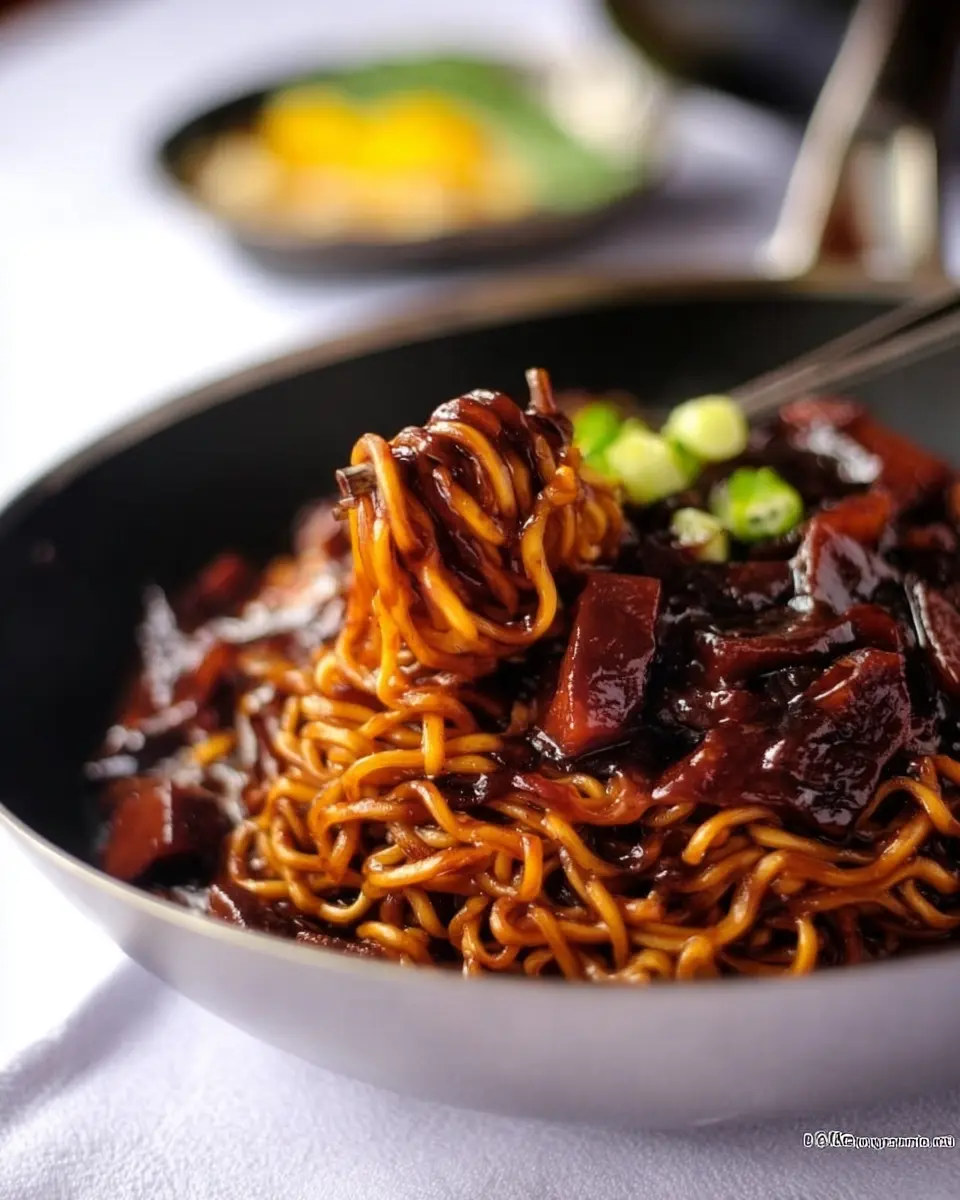
Korean Black Bean Sauce Noodles, or Jajangmyeon, is a beloved dish that brings comfort and flavor to the table. Originating from Chinese-style dishes in Korea, it features a rich and savory black bean sauce made from fermented black bean paste known as Chunjang. This staple combines tender noodles with a medley of fresh vegetables and beef, creating a delightful meal that's both hearty and satisfying.
Have you ever craved something that's not only delicious but also filling? Jajangmyeon ticks all the boxes! The noodles are typically paired with succulent beef and a colorful assortment of veggies, making it a balanced and nutritious option for lunch or dinner.
If you're new to Korean cuisine, you'll be pleased to know that making Korean Black Bean Sauce Noodles at home is quite simple—it's perfect for those who want to impress friends or family with a taste of Korea. Plus, once you master this dish, you'll have a delicious meal that’s easy to whip up on busy work nights.
Ready to dive into the world of Korean flavors? Let’s check out the ingredients and cooking steps for this mouthwatering dish!
Ingredients for Korean Black Bean Sauce Noodles
Main ingredients
To make a delicious plate of Korean Black Bean Sauce Noodles, you’ll need a few staple ingredients that work together beautifully:
- 1 kg fresh jajangmyeon noodles (or substitute with udon or Kalguksu noodles)
- 1 large onion
- 1 medium zucchini
- 2 large potatoes
- 7 large button mushrooms
- ¼ small cabbage
- 600 g diced beef
With these fresh veggies and tender beef, you'll create a comforting base that’s rich in flavor.
Marinade and sauce ingredients
Next, you’ll want to elevate the flavors with the perfect marinade and sauce:
- 1 tablespoon rice vinegar
- Pinches of salt and black pepper
- ¼ teaspoon ginger powder
- 6 tablespoon Korean black bean paste (Chunjang)
- 90 g lard (or cooking oil)
- 2 tablespoon brown sugar
- 4 tablespoon rice vinegar
- 1 cup chicken stock
- 1 cup water
- Slurry (potato starch + water)
These ingredients create that signature savory, umami-packed flavor profile that makes this dish so addictive!
Optional toppings
Lastly, don’t forget the garnishes to brighten your noodle dish:
- 1 large cucumber (julienned for crunch)
- Peas or sweet corn (from a tin for added sweetness, optional)
- Hard-boiled egg (sliced for a rich addition)
Each topping not only enhances the aesthetics but adds extra layers of flavor and texture. Don’t hesitate to mix and match according to your preferences!
Preparing Korean Black Bean Sauce Noodles
Step 1: Preparing the ingredients
To kick off your culinary adventure with these Korean Black Bean Sauce Noodles, make sure all your ingredients are prepped and ready to go. Start by gathering everything you'll need, including:
- 1 kg fresh jajangmyeon noodles (or udon or Kalguksu noodles)
- 600g diced beef
- A large onion, medium zucchini, two large potatoes, seven mushrooms, and a quarter head of cabbage, all chopped into bite-sized pieces.
- Don't forget about the marinade: you’ll need rice wine, salt, black pepper, and ginger powder!
Rinsing the beef under cold water and patting it dry ensures that it’s clean and ready for the marinade. Now, set the table, pour yourself a drink, and let’s dive in!
Step 2: Marinating the beef
While your ingredients are prepped, it’s time to infuse some flavor into that beef. A simple yet effective marinade can do wonders. Combine 1 tablespoon of rice wine, a sprinkle of salt, a dash of black pepper, and a pinch of ginger powder in a bowl. Toss in the diced beef and ensure it’s evenly coated. Let that marinate for about 15 minutes. This step is crucial, as marinated beef enhances the overall taste of your Korean Black Bean Sauce Noodles.
Step 3: Cooking the black bean sauce
Now, heat up your wok until it’s hot, and let’s bring that black bean sauce to life! Add 90g of lard (or cooking oil) to the wok and let it melt. Then stir in 6 tablespoons of Korean black bean paste (Chunjang) and keep stirring for about 3-5 minutes to avoid burning. The smell will be incredible! Once it's ready, add in 2 tablespoons of brown sugar, followed by 4 tablespoons of rice wine, and mix it all together. This forms the rich foundation of your dish!
Step 4: Boiling the noodles
As your sauce is cooking, it’s a great time to boil your noodles. Bring a pot of water to a rolling boil and add your fresh noodles of choice. Cook them for about 3-5 minutes until they’re tender but still have a nice bite to them. After draining, rinse them with cold water to halt the cooking process. This little step ensures your noodles won't get mushy later on.
Step 5: Combining everything
With everything prepped and cooked, it’s time to bring your Korean Black Bean Sauce Noodles together. Start by adding your marinated beef to the wok and cook it until it’s half done. Toss in your chopped veggies (onions, zucchini, potatoes, mushrooms, and cabbage) and stir until the vegetables are cooked through. Finally, combine the black bean sauce back into the mixture and let it simmer for a few minutes.
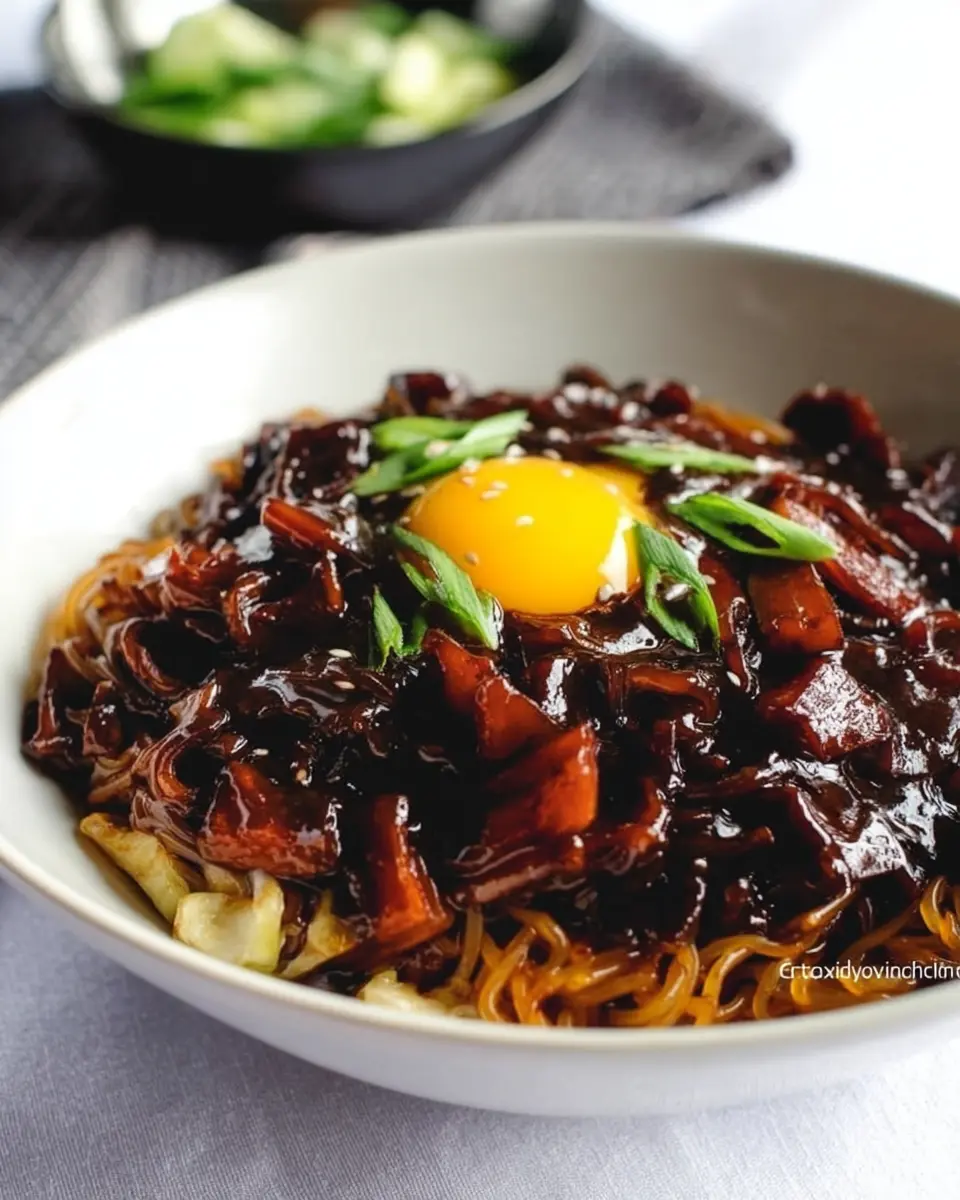
Serve the black bean sauce over your beautifully cooked noodles. Top with julienned cucumber, peas, or even a hard-boiled egg for that perfect finishing touch. Now, grab your chopsticks, mix well, and enjoy every delightful bite of those Korean Black Bean Sauce Noodles.
Variations on Korean Black Bean Sauce Noodles
Vegetarian Version
If you're looking for a vegetarian twist on Korean Black Bean Sauce Noodles, simply swap the beef for tofu or an assortment of your favorite vegetables. Try adding sliced bell peppers, carrots, and snap peas for a colorful and nutritious dish. To ensure a satisfying flavor, enhance your sauce with a splash of vegetable broth in place of the chicken stock. This variation is not only delicious but also packed with plant-based nutrients!
Spicy Black Bean Sauce Noodles
For those who crave a spicy kick, add gochujang (Korean chili paste) to your black bean sauce. A tablespoon or two can elevate the dish, bringing a rich heat that complements the deep flavors of the black bean paste. For an even bolder statement, toss in some sliced fresh chili or sprinkle on red pepper flakes just before serving. It's a delightful way to customize your Korean Black Bean Sauce Noodles while impressing your taste buds!
Cooking tips for Korean Black Bean Sauce Noodles
Tips for perfecting the sauce
To achieve a rich and authentic flavor in your Korean Black Bean Sauce Noodles, start with quality Korean black bean paste (Chunjang). Sauté it slowly to develop its natural sweetness—this extra time is worth it! Consider using lard for a traditional taste, or opt for a neutral oil like rice bran if you prefer. Adjust the thickness of your sauce with a well-mixed slurry of potato starch and water, adding it gradually until you reach the desired consistency.
Best noodle options to use
For the best texture, jajangmyeon noodles are ideal, but you can also use udon or kalguksu noodles. These options provide a hearty bite that complements the savory sauce beautifully. Always remember to rinse your noodles in cold water after boiling; this helps prevent them from becoming too soft and mushy. Do you have a favorite type of noodle? Experimenting can lead to delightful discoveries! For more noodle options, check out this guide.
Serving suggestions for Korean Black Bean Sauce Noodles
Traditional accompaniments
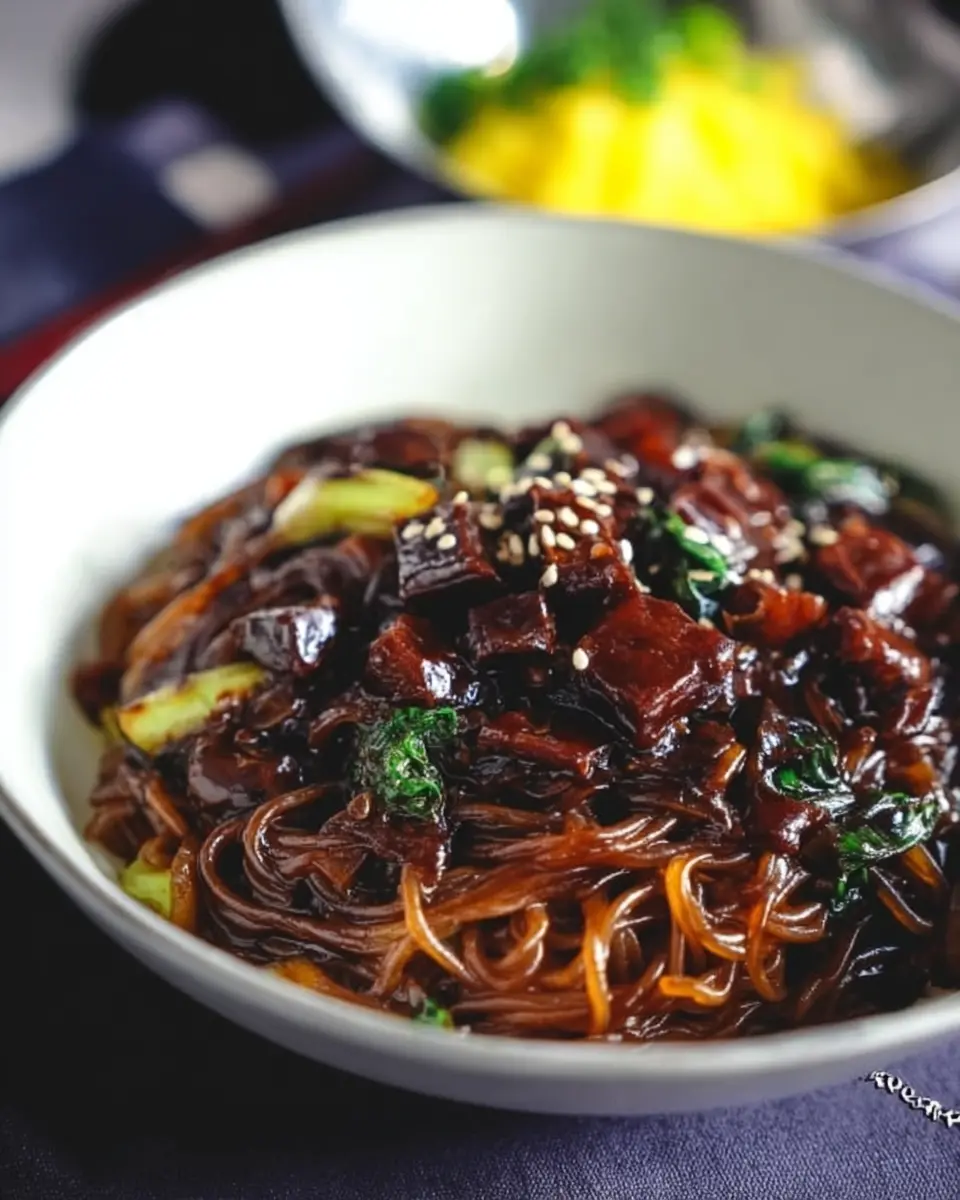
When enjoying Korean Black Bean Sauce Noodles, consider pairing them with pickled radish, which offers a crisp texture and a tangy flavor that cuts through the rich sauce. Additionally, kimchi is a must-have; its spicy profile complements the savory noodles beautifully. For a touch of freshness, adding slices of cucumber not only enhances the dish aesthetically but also adds a delightful crunch.
Creative side dishes
To elevate your meal further, think outside the box! Serve alongside a mixed vegetable stir-fry for added nutrition and color. A side of steamed broccoli or a simple Asian slaw made with cabbage, carrots, and sesame dressing would also work wonders. For a heartier option, try crispy tofu bites or even chicken satay skewers for an extra protein boost! These additions create a unique fusion experience while still paying homage to traditional flavors.
Time Breakdown for Korean Black Bean Sauce Noodles
Preparation Time
Get ready to savor your experience! Preparation for these delicious Korean Black Bean Sauce Noodles takes about 15 minutes. This includes marinating the beef and chopping up your favorite vegetables.
Cooking Time
Once you're prepped, the cooking magic happens in roughly 25 minutes. This time covers stirring, simmering, and creating that rich black bean sauce you'll love.
Total Time
In total, you're looking at around 40 minutes from start to finish. A perfect balance of efficiency and flavor for a delightful weeknight meal!
Nutritional Facts for Korean Black Bean Sauce Noodles
When diving into the delicious world of Korean Black Bean Sauce Noodles, it’s always good to know what you’re consuming. Here's a quick glance at the nutritional profile you can expect from a typical serving:
Calories
Each serving contains approximately 522 calories, making it a satisfying choice for a hearty meal without going overboard.
Protein
You'll get about 22 grams of protein from the dish, primarily sourced from the beef, which is essential for muscle repair and growth.
Fiber Content
With 4 grams of fiber per serving, these noodles are not only tasty but also support digestive health, keeping you feeling fuller for longer.
For a deep dive into how to balance your diet while enjoying Korean Black Bean Sauce Noodles, consider checking out reputable nutrition resources like the U.S. Department of Agriculture or Nutrition.gov for more insights.
FAQs about Korean Black Bean Sauce Noodles
How can I make the sauce less salty?
If you're looking to tone down the saltiness of your Korean Black Bean Sauce Noodles, consider reducing the amount of Korean black bean paste (Chunjang) you use. You can also add more water or chicken stock to dilute the sauce. Another effective method is to incorporate additional vegetables, like carrots or bell peppers, which can help balance the flavor while still delivering that wonderful taste.
Can I freeze leftover black bean sauce?
Absolutely! Korean black bean sauce freezes well, making it a perfect option for meal prep. Just let the sauce cool completely, then store it in an airtight, freezer-safe container. It should last about 3 months. When you're ready to use it, thaw it in the fridge overnight and reheat before serving.
What side dishes pair well with this dish?
This dish shines alongside fresh, crunchy pickled radish, making it a classic choice. You might also enjoy it with a light salad or steamed vegetables. For a heartier meal, consider serving Korean Black Bean Sauce Noodles with kimchi or even a simple cucumber salad for a refreshing contrast to the rich sauce.
Conclusion on Korean Black Bean Sauce Noodles
If you’re craving a delicious, comforting dish, Korean Black Bean Sauce Noodles are a perfect choice. Rich in flavor and easy to prepare, they can elevate any weeknight dinner. Don’t hesitate to customize the ingredients and make this dish your own! Enjoy your culinary journey!
Korean Black Bean Sauce Noodles
Equipment
- Wok
- Pot
- Kitchen paper
Ingredients
Main
- 1000 g fresh jajangmyeon noodles Or udon noodles or Kalguksu noodles
- 1 large onion (150g / 5.3 ounces)
- 1 medium zucchini (110g / 3.9 ounces)
- 2 large potatoes (470g / 1 pound)
- 7 large button mushrooms (240g / 0.5 pounds)
- ¼ small cabbage (160g / 5.6 ounces)
- 600 g diced pork (1.3 pounds)
Pork marinade sauce
- 1 tablespoon rice wine (or mirin)
- 5 sprinkles ground salt
- 5 sprinkles ground black pepper
- ¼ teaspoon ginger powder
Korean black bean sauce
- 6 tablespoon Korean black bean paste (Chunjang)
- 90 g Lard (or 6 tablespoon cooking oil – e.g. rice bran oil)
- 2 tablespoon brown sugar
- 4 tablespoon rice wine (or mirin)
- 1 cup chicken stock (as pure and natural as possible)
- 1 cup water
- 5 tablespoon potato starch for slurry
- 4 tablespoon water for slurry
Toppings
- 1 large cucumber (150g / 5.3 ounces)
- Peas or sweet corn (from a tin, optional)
- Hard boiled egg (optional)
Instructions
Preparation
- Rinse the pork in cold water and pat it dry with kitchen paper. Add the pork marinade sauce onto the pork. Mix them well and leave it for 15 mins.
- Cut the onion, zucchini and potato into small cubes.
- Thin slice the mushrooms.
- Cut the cabbage into small to medium size pieces.
- Julienne cut the cucumber.
Cooking
- Pre heat the wok until the bottom is heated well. Add the lard (or cooking oil) and melts it in the wok. Add the black bean paste and stir it constantly on medium heat for 3 to 5 minutes. (Try not to burn it.) Add the brown sugar and stir it for an additional 2 to 3 mins.
- Scoop out the black bean paste (without the oil) and set it aside. Leave the oil in the wok to use in the next step.
- Add the pork into the wok and stir until the pork is half cooked.
- Add the onion, zucchini, and potato and stir until all are ⅓ cooked (for 3 to 5 mins).
- Add the mushrooms and cabbages and stir for 2-3 mins.
- Add the black bean paste (from step 2) into the wok and mix it in with vegetables. Stir for 1 to 2 mins.
- Add the chicken stock, water and rice wine then simmer it for 5 to 7 mins on medium heat. (Cover the wok with a lid if possible. This will make the cooking process faster.)
- Add the slurry into the wok then stir it. (This will thicken the black sauce. It is the final stage of making the black bean sauce.)
- (While working on step 7) Boil some water in a pot and add the noodles when it starts to boil. Boil them until the noodles are cooked (for 3 to 5 mins).
- Rinse the noodles in cold water and drain. Put them into a serving bowl/plate.
- Add the black bean sauce (from the step 8) on top of the noodles. You can serve it as it is or decorate it with some cucumber slices, green peas or sweet corn or hardboiled egg.
- Mix the sauce and the noodles well with chopsticks. Dig in. (It is ideal to have them with some (yellow) pickled radish. Apparently it helps digestion. Also eat it up quickly before the noodles get swollen.)


Leave a Reply